
Market Insights
SCHINEX provides electrical power and critical infrastructure solutions supported by technical expertise, global manufacturing partnerships, procurement capability, and disciplined project execution.
MARKET INSIGHTS
The Forces Reshaping Power & Critical Infrastructure
The U.S. power and infrastructure landscape is undergoing significant change. Rising electricity demand, rapid data center development, expanding domestic manufacturing, new generation and storage capacity, transmission requirements, aging infrastructure, and supply-chain constraints are reshaping how critical projects are planned and delivered.
SCHINEX monitors the market forces influencing infrastructure investment, engineering, procurement, and execution—providing perspective on the developments shaping the next generation of power and critical infrastructure, while understanding the market behind this infrastructure.
MARKET SNAPSHOT
Infrastructure in Transition
After nearly two decades of relatively flat electricity demand, the U.S. power system is entering a new period of expansion. At the same time, growth in large electrical loads, generation development, interconnection requirements, and aging grid infrastructure is creating additional demand across transmission, substations, electrical equipment, engineering, and project execution.
5+ YEARS — Interconnection Request to Commercial Operation
For projects reaching commercial operation during 2025 in regions with available data, Berkeley…
549 GW — Advanced Interconnection Pipeline Not Yet Operational
Berkeley Lab reports that approximately 549 GW of capacity already had a draft or executed…
2,060+ GW — Generation & Storage Seeking Grid Interconnection
At the end of 2025, approximately 8,200 projects representing more than 2,060 GW of generation and…
86 GW — Initial 2026 U.S. Utility-Scale Capacity Additions Planned
U.S. developers and power-plant operators reported plans to add approximately 86 GW of new…
THE BIGGER PICTURE
Demand Is Growing. The Infrastructure Behind It Must Grow With It.
The transformation of the U.S. power sector extends well beyond the construction of new generating facilities.
Every new source of generation and every major new electrical load must ultimately connect to an interconnected power system. That requires transmission capacity, substations, transformers, switchgear, protection systems, controls, communications, distribution infrastructure, and the engineering necessary to bring those systems together reliably.
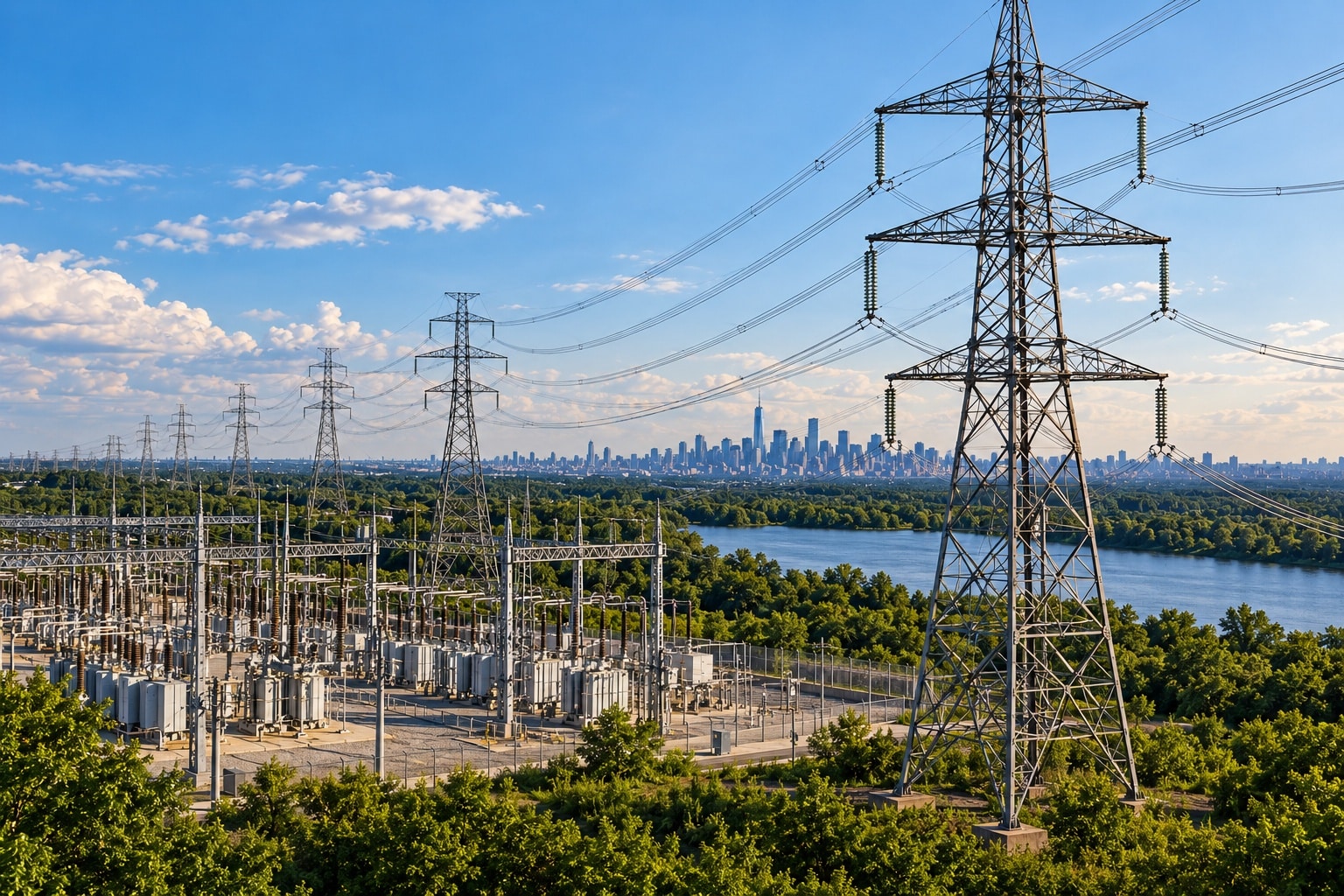
DOE’s 2026 Draft National Transmission Needs Study identifies a pressing need for additional transmission infrastructure associated with data centers, expanding domestic manufacturing, large industrial loads, generation and load interconnections, reliability requirements, and transmission congestion. DOE also notes that MISO, SPP, PJM, and ERCOT have recently approved some of their largest transmission portfolios.
GRID EXPANSION & MODERNIZATION
A Grid Built for a Different Era Is Being Asked to Support a Different Future
Between 2016-2024, approximately 85,000 circuit-miles of transmission rated 69 kV and above were newly constructed, upgraded, or rebuilt across the United States, according to DOE’s 2026 Draft National Transmission Needs Study.
DOE identified reliability as the largest driver of those additions at 38%, followed by aging infrastructure at 20%, load growth at 17%, and generation requirements at 13%.
Yet the requirement for additional infrastructure continues. Growth in data centers, industrial facilities, domestic manufacturing, generation, and other major electrical loads is creating requirements for both new infrastructure and modernization of existing assets.
SCHINEX Perspective:
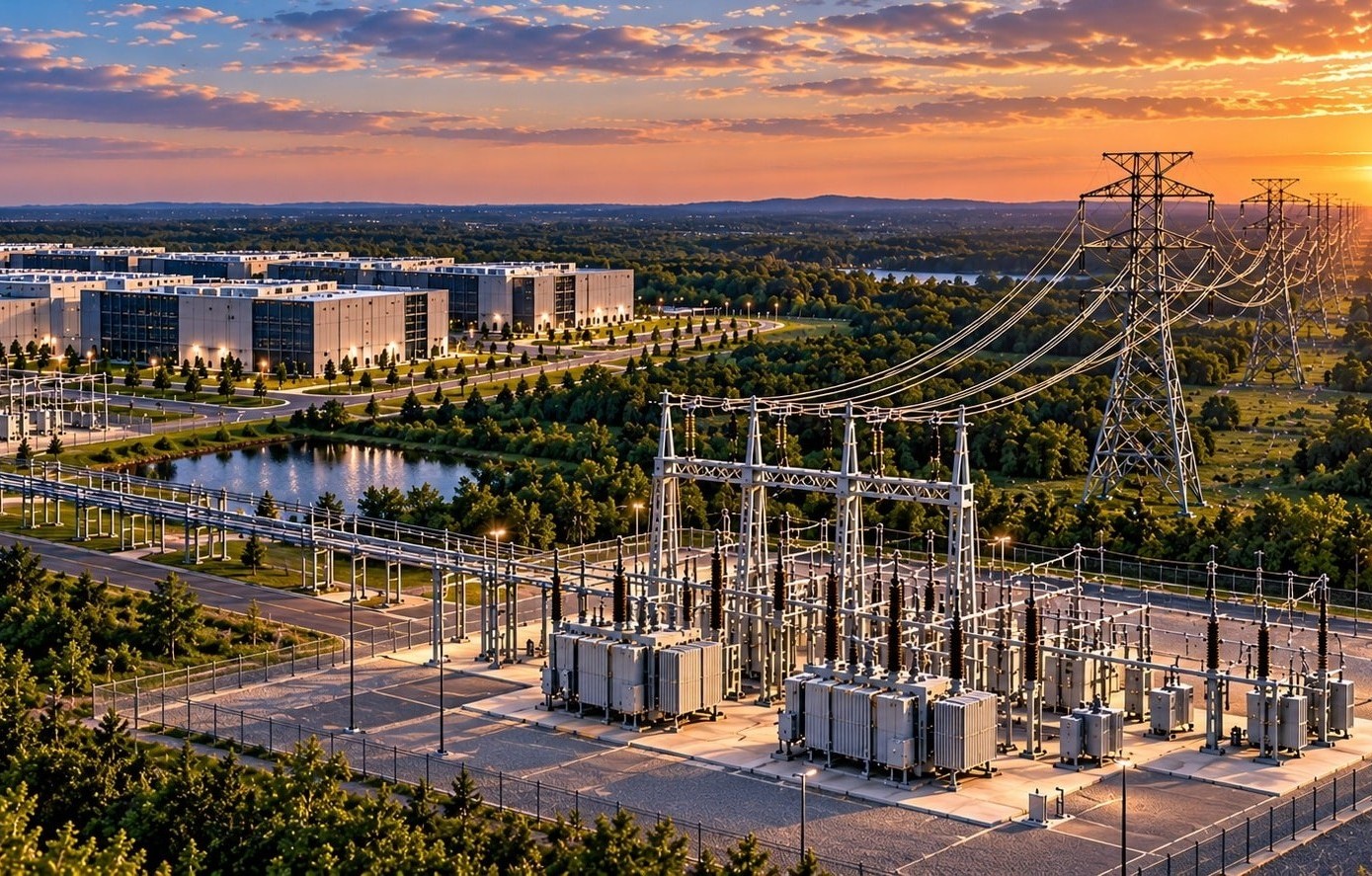
Data-center growth is therefore not simply about supplying additional megawatts. It requires the electrical infrastructure necessary to deliver those megawatts reliably—from utility interfaces and substations through transformers, switchgear, protection, controls, and critical facility power systems.
GENERATION, STORAGE & INTERCONNECTION
New Capacity Must Still Reach the Grid
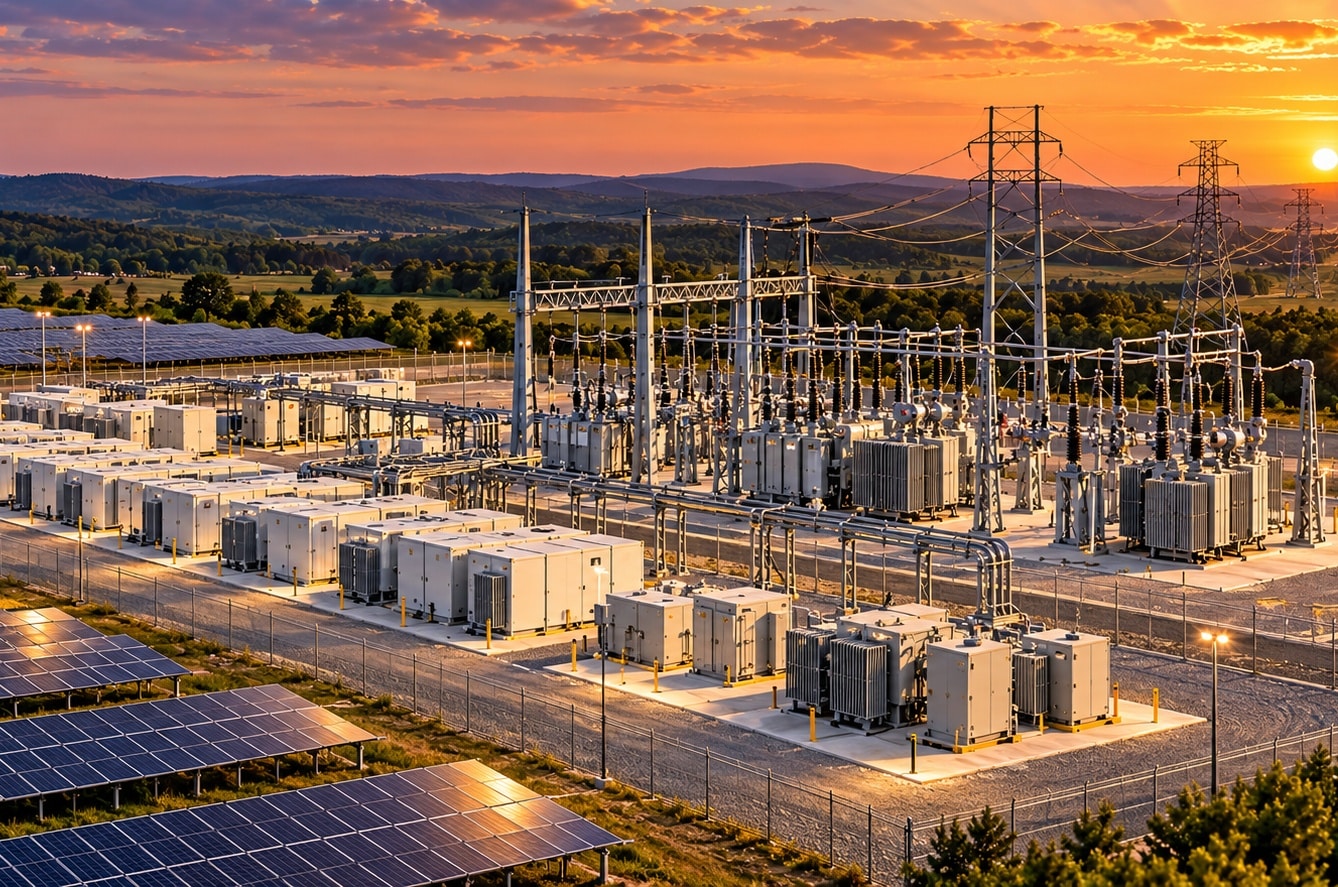
The development pipeline for new generation and storage remains substantial. However, capacity identified in an interconnection queue does not represent operating infrastructure.
Projects must progress through studies, commercial agreements, engineering, procurement, permitting, utility upgrades, construction, testing, and commissioning before reaching commercial operation.
The more than 2,060 GW that was active in U.S. interconnection queues at the end of 2025, combined with the historically low percentage of requested capacity ultimately reaching commercial operation, illustrates the difference between project origination and successful execution.
SCHINEX Perspective:
The infrastructure opportunity increasingly lies in helping viable projects move from development into execution. Technical coordination, equipment strategy, quality oversight, logistics, construction, and commissioning become increasingly important as projects advance toward energization.
EQUIPMENT & SUPPLY CHAIN
Equipment Availability Is Becoming a Project Strategy
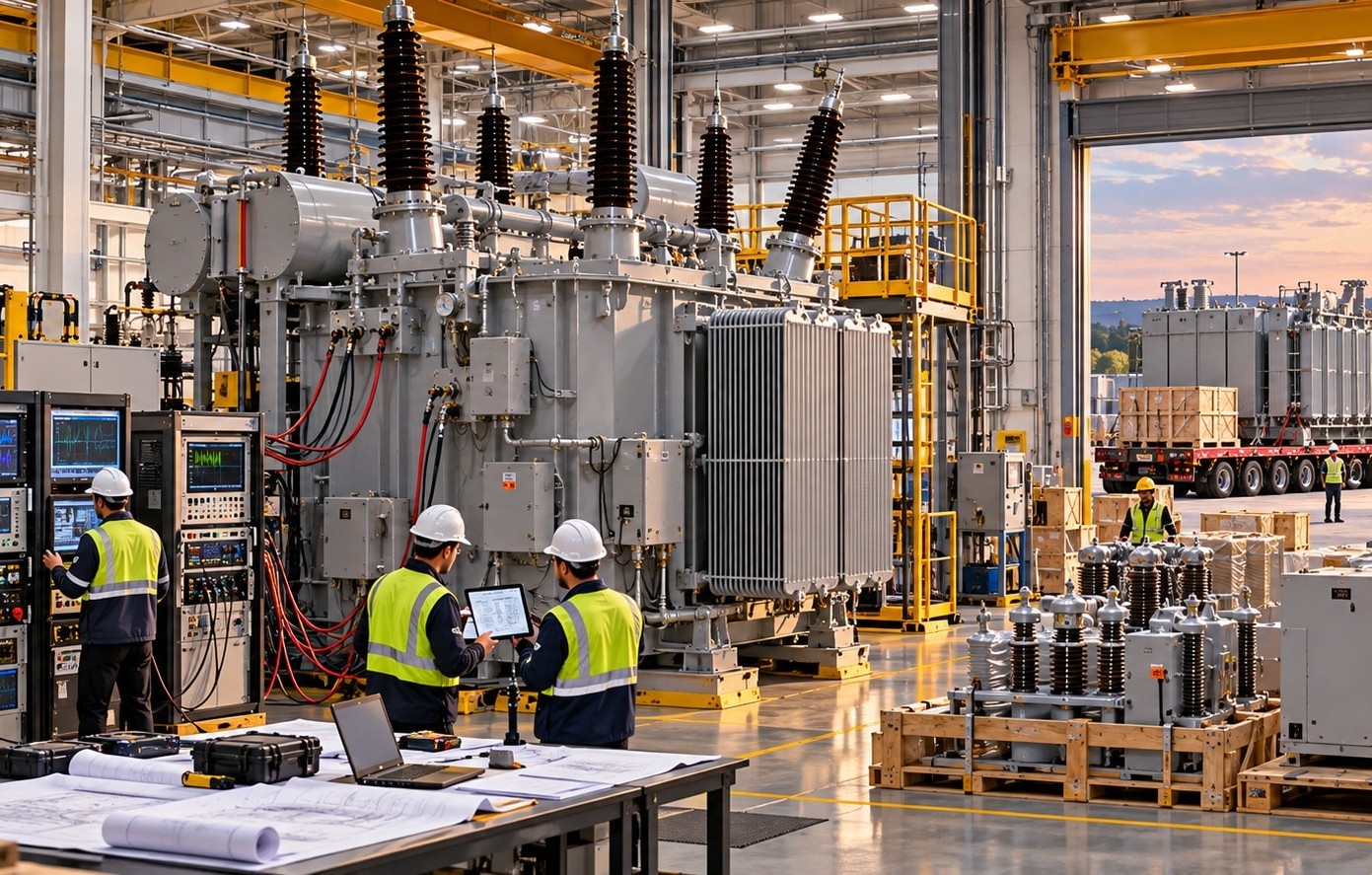
Critical power equipment has traditionally been procured after major design decisions were substantially complete. Long manufacturing lead times and changing supply-chain conditions are increasingly challenging that model.
DOE identifies dependence on imported components and materials, limited domestic production capacity, and extensive equipment customization among factors contributing to supply-chain constraints for critical grid equipment.
SCHINEX Perspective:
Successful procurement increasingly requires coordination between engineering and sourcing. Equipment specifications, manufacturer qualification, commercial evaluation, inspection requirements, FAT, documentation, logistics, and installation interfaces should be evaluated as part of an integrated project strategy rather than as independent purchasing activities.
From Demand to Energization
Demand Growth
Data Centers • Manufacturing • Industrial Expansion • Economic Growth • Infrastructure Modernization
Power & Grid Capacity
Generation • Energy Storage • Transmission • Distribution • Utility Interconnection
Critical Equipment
Transformers • Switchgear • Protection & Control • Substations • Power Systems
Project Execution
Technical & Engineering Coordination • Procurement • Supply Chain • Construction Coordination • Testing & Commissioning • Life-Cycle Management
Reliable Operations
Energization • Maintenance • Warranty Support • Training • Lifecycle Management
Infrastructure demand does not stop at the megawatt.
Every new source and every new load requires the engineering, equipment, coordination, and execution necessary to connect it reliably.
WHAT WE’RE WATCHING
Latest Insights
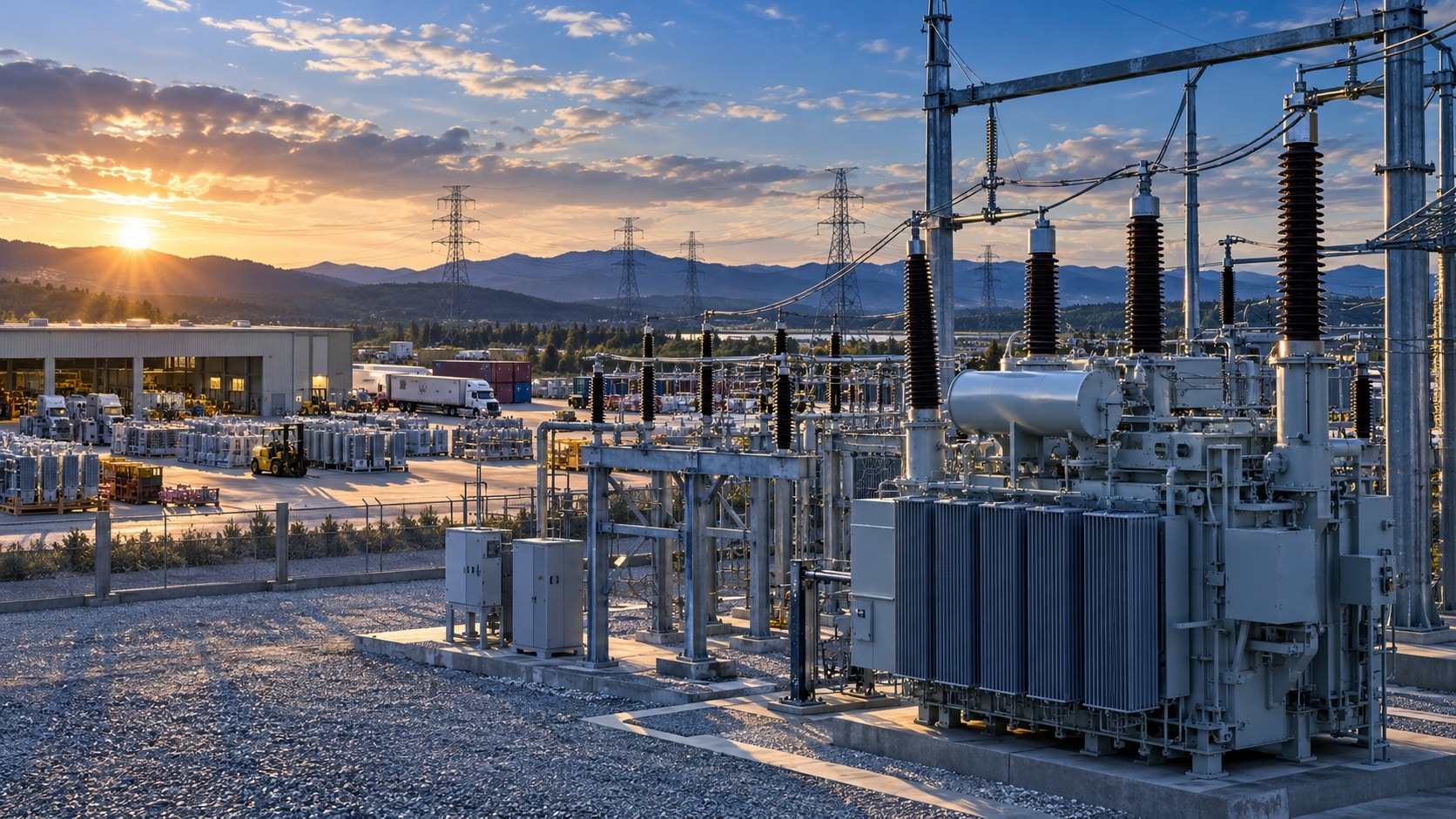
2+ YEARS — Lead Times for Certain Critical Grid Equipment
DOE reports that transformers, circuit breakers, substation components, and power electronics continue to face significant supply-chain challenges, resulting in lead times of two years or more for certain critical equipment. DOE also reported that…
5+ YEARS — Interconnection Request to Commercial Operation
For projects reaching commercial operation during 2025 in regions with available data, Berkeley Lab reports that the median duration from interconnection request to commercial operation exceeded five years. It also found that only 13% of capacity that submitted…
549 GW — Advanced Interconnection Pipeline Not Yet Operational
Berkeley Lab reports that approximately 549 GW of capacity already had a draft or executed interconnection agreement but had not yet reached commercial operation at the end of 2025. This included approximately 256 GW of solar, 161 GW of storage, 76 GW of wind, and 45…
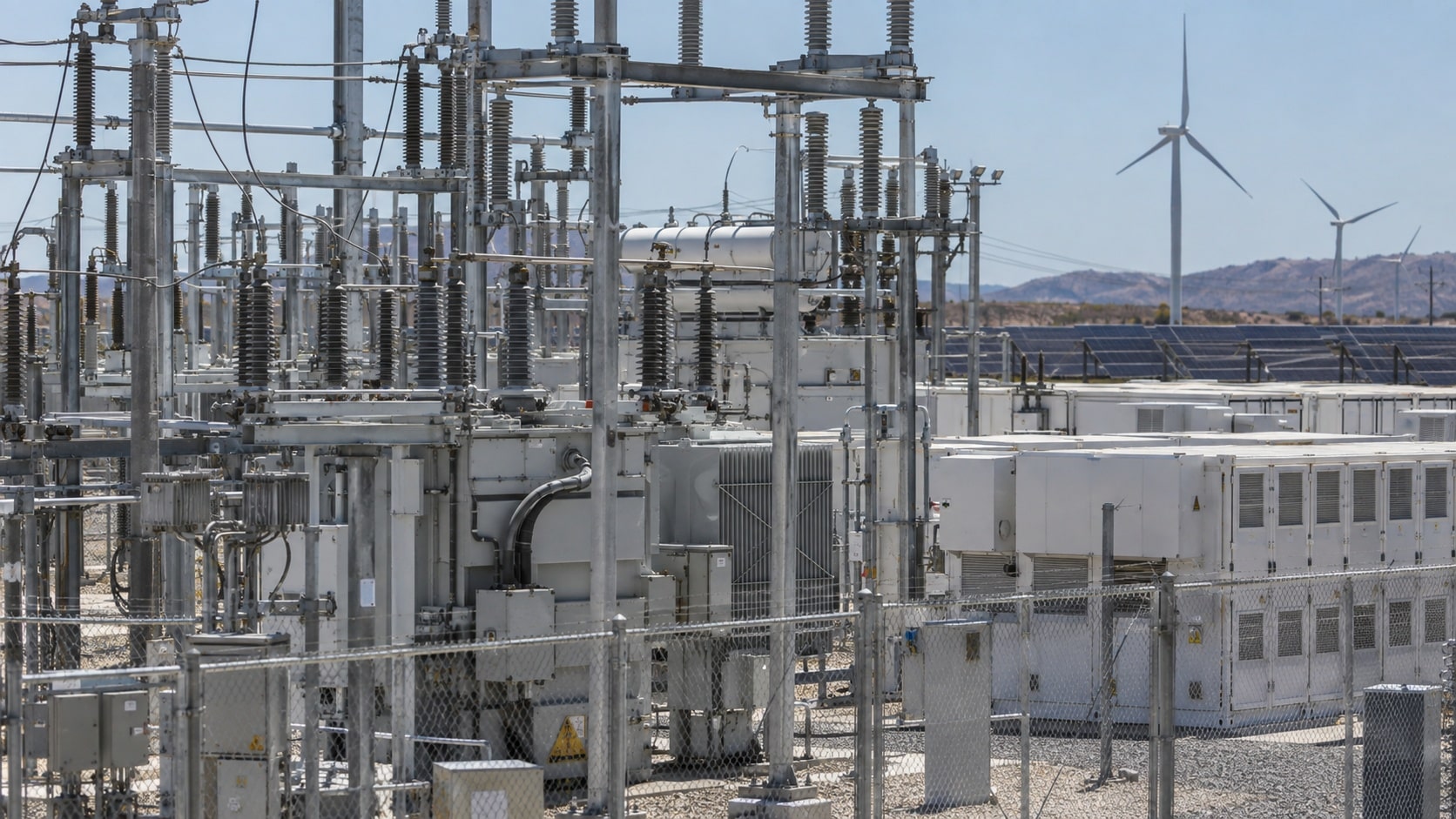
2,060+ GW — Generation & Storage Seeking Grid Interconnection
At the end of 2025, approximately 8,200 projects representing more than 2,060 GW of generation and storage capacity were actively seeking connection to the U.S. transmission grid. This included approximately 1,312 GW of generation and 749 GW of storage. Berkeley Lab’s…

86 GW — Initial 2026 U.S. Utility-Scale Capacity Additions Planned
U.S. developers and power-plant operators reported plans to add approximately 86 GW of new utility-scale electric generating capacity in 2026, which would represent a record if fully realized. The planned additions are approximately 51% solar, 28% battery storage, and…
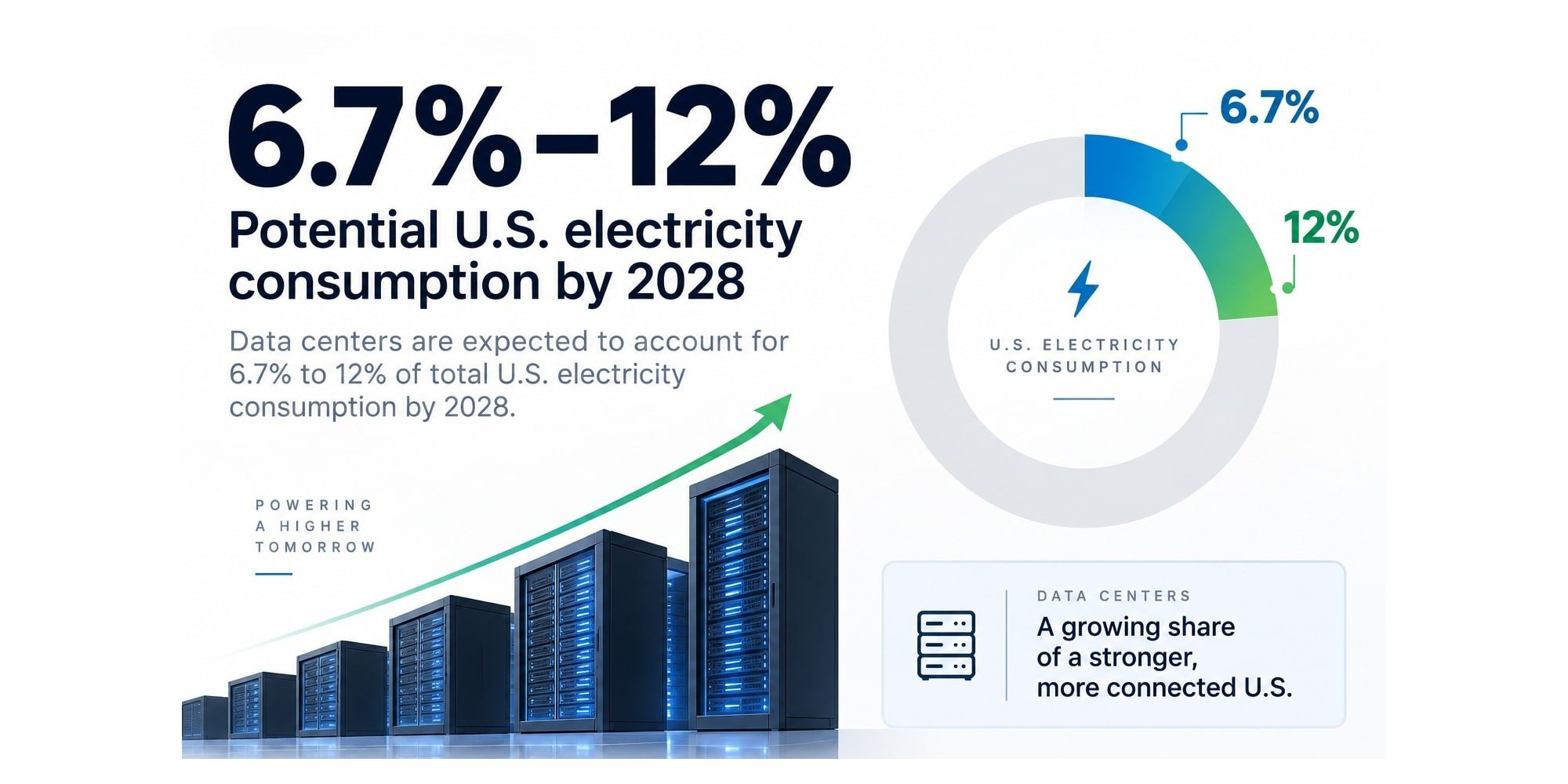
6.7–12% — Potential U.S. Electricity Consumption by Data Centers by 2028
Data centers accounted for approximately 4.4% of total U.S. electricity consumption in 2023. DOE, citing Lawrence Berkeley National Laboratory research, reports that data centers could consume approximately 6.7% to 12% of U.S. electricity by 2028. SCHINEX Perspective:…
Market Insights is provided by SCHINEX Corporation for general informational purposes only. Information is based on third-party sources believed to be reliable at the time of publication, but SCHINEX does not represent that the information will remain current or complete. Market Insights does not constitute engineering, legal, financial, investment, procurement, or other professional advice. Project requirements and market conditions should be independently evaluated based on the specific circumstances involved.
Third-party company names, agency names, publications, trademarks, and data sources are referenced for informational purposes only and do not imply affiliation with, sponsorship of, or endorsement of SCHINEX.

GLOBAL NETWORK
Global Manufacturing Network.
U.S.-Focused Execution.
SCHINEX works with qualified manufacturers and industry partners across key international markets, combining global sourcing reach with project-specific technical, commercial, and execution support for U.S. power and critical infrastructure.